
Ms. Hannah G. Permites
Science II and Research II Teacher, Misamis Oriental General Comprehensive High School (MOGCHS), Cagayan de Oro City.
Malnutrition In Our Midst
By
Hannah G. Permites
Arnold is seated at the back of the classroom. His classmates jokingly call him bunso. Niño is enrolled in another section but still suffers the same fate.
They are just two of the students in this school who are often teased by their classmates as bunso (youngest) because of their size. Both 13-years old, Arnold and Niño weigh 24- and 28-kgs respectively and stand more or less about 1.3 meters. Compared to the mean weight of 31.66 kg for Filipinos adolescents as reported by FNRI-DOST in 2005, both are considered as underweight. Since school year 2005 - 2009, there is an average of about 11.6% or 200 students are overweight. This is lower than the 2005 national data reported by FNRI-DOST of 19.8% underweight and 2.9% overweight but still far from achieving the number one Millenium Development Goal of eradicating extreme poverty and hunger in 2015.
In a survey conducted early this month, students who were underweight said that they were not happy and felt insecure with their body sizes. The girls wanted to become someone like Kris Bernal or Anne Curtis while the boys idolized Chris Tiu. All of them however, believed that with adequate and nutritious food, they can still regulate their weight and height considering that they are still teenagers. Experts said that the lower than average sizes of children and adolescents could be a reacting mechanism to low food intake.
Malnutrition is often attributed to poverty and rising food prices. Regarding Arnold and Niño, Arnold's father, a widower, is supporting his family of three kids in a rented house by driving a rented sikad or a public utility bicycle for an income whereas Niño's parents are both vegetables vendors in Cogon market. Such financial constraints result to insufficient supplements in the diet of the children.
Eating calorie-rich foods and weight-lifting exercises are important measures for someone to gain weight, but access to these things is somewhat limited due to insufficient income. Food fortification and cash vouchers are some of the emergency measures the Filipino government has instituted to combat this problem, while Green Revolution, nutrition education and family planning are some of the envisioned long-term programs that can reduce malnutrition in our country.
The author is currently teaching Science II and Research II at the Misamis Oriental General Comprehensive High School, Cagayan de Oro City. 6-15-2011.
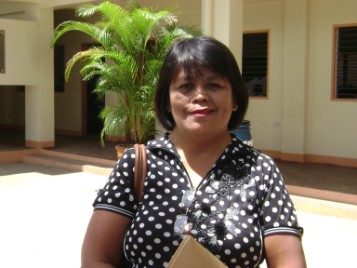
Ms. Florentina M. Janier
Science II Teacher at the Misamis Oriental General Comprehensive High School (MOGCHS), Cagayan de Oro City.
Science Process Skills, What about it?
By Florentina M. Janier
Science is a subject that can help one in gaining skills in communicating, thinking and problem-solving. These are abilities that everyone needs to live in today's challenging and changing world.
The Engineering and Science Program (ESEP) has been established in accordance with the Philippine Constitution mandate of developing scientific and technology efficiency among the learners. Thus, Science Classes came into existence especially in MOGCHS, believed to be one of the biggest schools in the region. It has been implemented since School Year 2004. Since then students of MOGCHS garnered awards in competitions especially in the field of Science and Technology and enjoyed scholarships in universities and colleges not only in Cagayan de Oro but also in Metro Manila.
Students are born with an inner curiosity which drives them to explore the world around them. As science teachers, we should be aware that process skills play a major role in the development of science knowledge. We should therefore give importance to these skills in our teaching. We should also remember that these skills are the students' tools to help them cope with the real life problems.
How are our students are performing when it comes to process skills? How do they perform when it comes to observing, inferring, classifying, analyzing, interpreting data, and applying them to new situations? These are just some of the process skills which students in both the ESEP and BEC curriculum must develop. With the introduction of the new curricular framework which is Understanding by Design, there is an increasing need to develop and enhance these skills among our students to meet the demands of time.
In a simple research made, wherein a class of 52 ESEP students and a class of 52 BEC students were compared, it was found out that out of ten questions of the Higher Order Thinking Skills; ESEP got a mean of 67.8% correct answers while BEC got 39.3%. Process skills measured were that of making an inference, organizing, analyzing, generalizing and applying. ESEP showed better results in applying, organizing and analyzing compared to BEC. However, students in both curricula are weak in the process of inferring. Such result may be expected, since ESEP students are those who are supposedly advanced. But it should be noted that when it comes too inference, they are almost of the same ability as the BEC.
This is a challenge not only to teachers handling the ESEP classes but to the BEC as well. As they move on to adulthood, they will be equally facing challenges which will help them cope with the real world. Science is not static; it goes with the changing world. With students fully equipped with skills, we are certain that they will also be fully equipped to face life.
The author is currently teaching Science II at the Misamis Oriental General Comprehensive High School, Cagayan de Oro City.
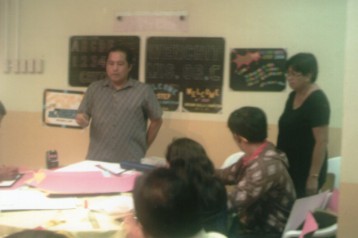
Mr. Wenchito G. Teopiz
Drafting Teacher of the Misamis Oriental General Comprehensive High School, Cagayan de Oro City.
By Wenchito G. Teopiz
The Technology and Livelihood Education Department of Misamis Oriental General Comprehensive High School
will launch this school year 2011- 2012 its new Project, the E-grades On line. The first of its kind in MOGCHS. Through
the website WWW.mogchs2010.yolasite.com, parents and students can now check the T.L.E. quarter grades aside from receiving the report card from the adviser at the end of every grading period.
Mr. Sinforoso Jun R. Montil Jr., our T.L.E. department head, instructed all teachers in the department to submit our report grades in a flask disk to Mr. Edgardo Robril. There are assigned teachers every year level who are tasked of transferring the grades on the website at the end of each grading period.
This project is adapted to provide quality service to the parents, students and to all stakeholders in the area of information dissemination. Likewise, students are now encouraged to perform better academically, because their outputs are now publish on line with more people have easy access to it.
As the saying Goes “computers/internet are here to stay “, we should make the most of it.
Author : Mr. Wenchito G. Teopiz, MT- I
Teaching 4th year Drafting subjects, Coach Chess ( Sec. Boys )
Mis Or TLE Teachers Showcase Culinary Expertise
Rhea Oliva D. Teopiz
Technology and Livelihood Education ( TLE ) teachers from the division of Misamis Oriental gather -May 24-25, 2012 at Tagoloan National High School to showcase their culinary expertise to their fellow Culinary Arts teachers. This In-Service Training participated in by teachers from Misamis Oriental General Comprehensive High School (MOGCHS), Tagoloan National High School , and Villanueva National High School aim to enhance the teachers’ cooking skills and to provide the students with new cooking ideas and recipes whose ingredients are available locally and always in season.
The highlighted easy and healthy dishes, which include Sesame Puffs, Veggie Salad, Homemade Sardines, Veggies Sotanghon ,Yummy Butter Cake , Malungay Cupcake and Puto are perfect for the students’ active lifestyle as well as the teachers.
Hereunder are some of the mouth-watering featured recipes during the training:
MALUNGGAY CUPCAKE
by
Rhea Oliva D. Teopiz
Ingredients :
5 ½ cups cake flour
1 tsp. salt
1 T. baking powder
1 cup butter
¾ cup sugar
3 egg yolk & 3 whole eggs
1 can condensed milk
4 T. blended malunggay ( 1 cup fresh malunggay : 1/2 cup water )
1 1/2 cup sprite soft drink
1 tsp. Banana flavor
Toppings: peanuts, raisins or cheese
Any frosting
Procedure :
1. Blend fresh malunggay with water. Refrigerate before using.
2. Sift flour, salt & baking powder together. Set Aside
3. Cream butter & sugar.
4. Add eggs one at a time. Continue beating.
5. Gradually add dry ingredients & sprite (start with dry and end up
with liquid). Flavor with banana essence.
6. Add condensed milk & blended malunggay.
7. Beat until smooth.
8. Pour mixture into paper cups.
9. Bake for 20- 30 minutes at 350 F.
Makes 20-24 cupcakes.
Sesame Puff
by
Hermogena Delicona
Ingredients:
4 c. All purpose flour
1 t. salt
1 t. baking soda
4 t. baking powder
1 ½ c sugar
4 T. oil
2 pcs. Egg yolk
1 c. evaporated milk
1/3 c. shredded carrots
2 c. sesame seeds
Procedure :
1. Combine sifted flour, salt, baking powder & soda in a bowl.
2. Mix oil, sugar, water, milk & eggs. Beat lightly until sugar dissolves.
3. Pour liquid over the dry ingredients, add carrots. Mix to blend.
4. Roll in floured board. Make a ball, brush with egg whites.
5. Coat each ball with sesame seeds.
6. Deep fry.

